Global Shutter
In contrast to rolling shutter methods used in most CMOS sensors, a global shutter ensures that every pixel on the sensor begins and ends exposure simultaneously. This uniform exposure is crucial for precision applications. When capturing fast-moving subjects or dealing with atmospheric turbulence, global shutter technology eliminates distortion and ensures high image quality.
BSI
Backside illumination (BSI) enhances sensitivity by changing how light enters the sensor. Traditional front-illuminated sensors force incoming light to pass through metal wiring layers before reaching the photosensitive region, reflecting some photons and lowering efficiency.
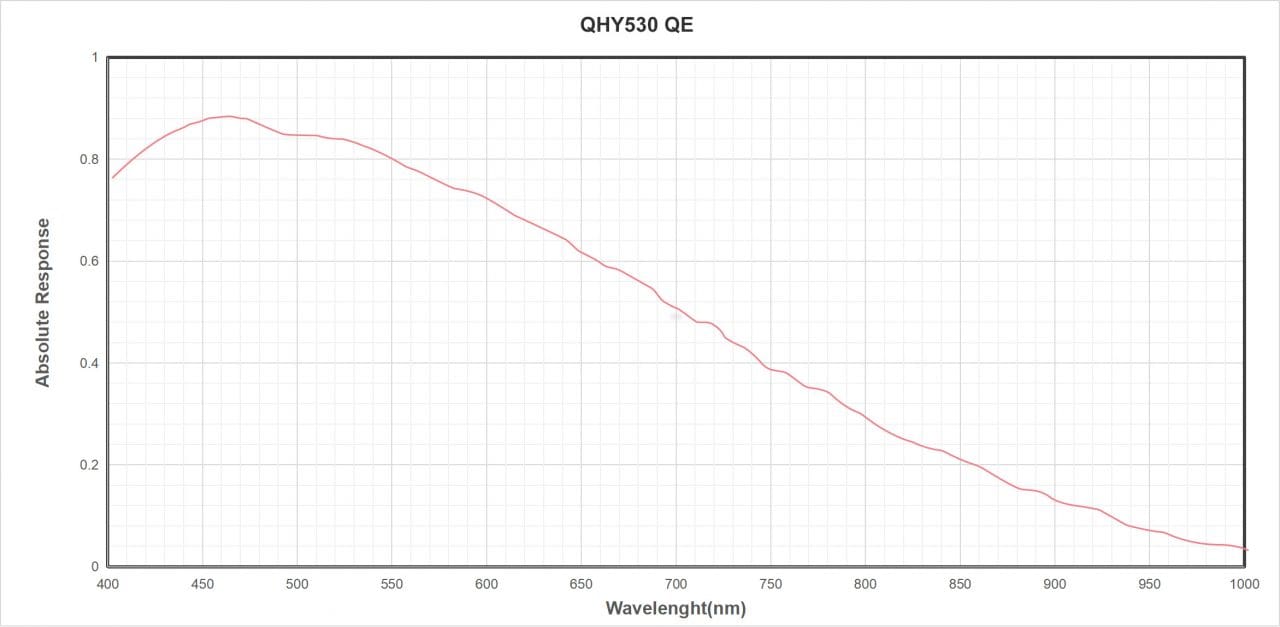
With BSI architecture, light directly hits the photosensitive layer from the back side of the sensor. This rearrangement places the wiring beneath the light-sensitive region, allowing more photons to generate electrons. The efficiency of converting photons to electrons—called quantum efficiency—increases, resulting in better sensitivity, especially when imaging faint sources.
Charge Binning
Unlike most CMOS cameras, this model includes true hardware-level binning (also known as charge-domain or FD binning), much like traditional CCD cameras.
Historically, only CCD sensors supported actual hardware binning, while CMOS models used software-based digital binning, which merely merged pixels algorithmically. The drawback with digital 2×2 binning, for example, is that although signal strength increases fourfold, noise doubles, leading to only a twofold gain in signal-to-noise ratio. Furthermore, this method does not improve frame rates. In contrast, hardware binning avoids amplifying noise and achieves a real 4× improvement in signal-to-noise. It also boosts frame rates significantly, even without enabling ROI mode.
Floating ROI
The “Floating ROI” (Region of Interest) function is currently under experimental development.
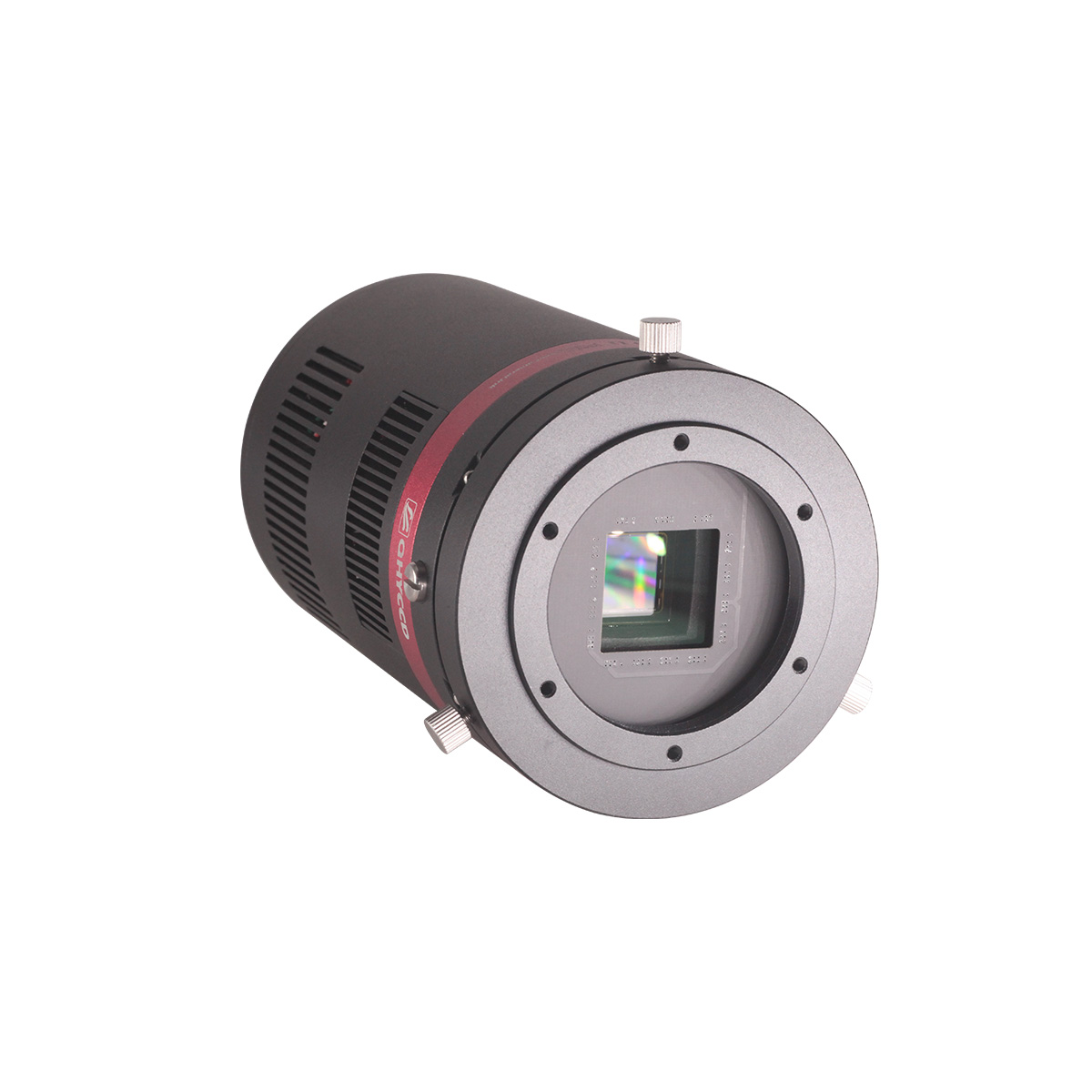
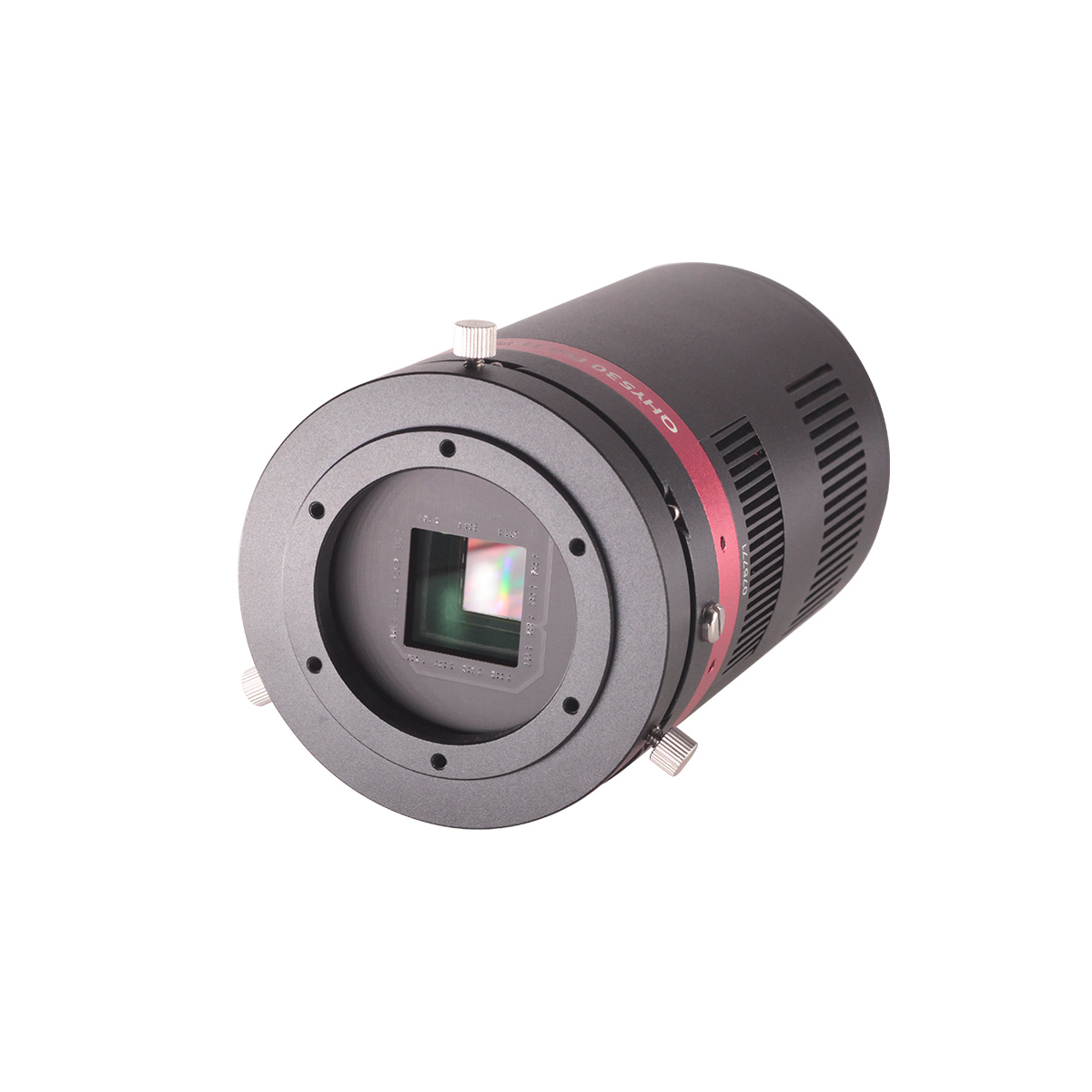
The QHY530 camera features a dynamic ROI system. While tracking fast-moving objects like satellites, space stations, or asteroids, the camera can detect these targets in real time and automatically reposition the ROI, effectively enabling auto-tracking and image stabilization.
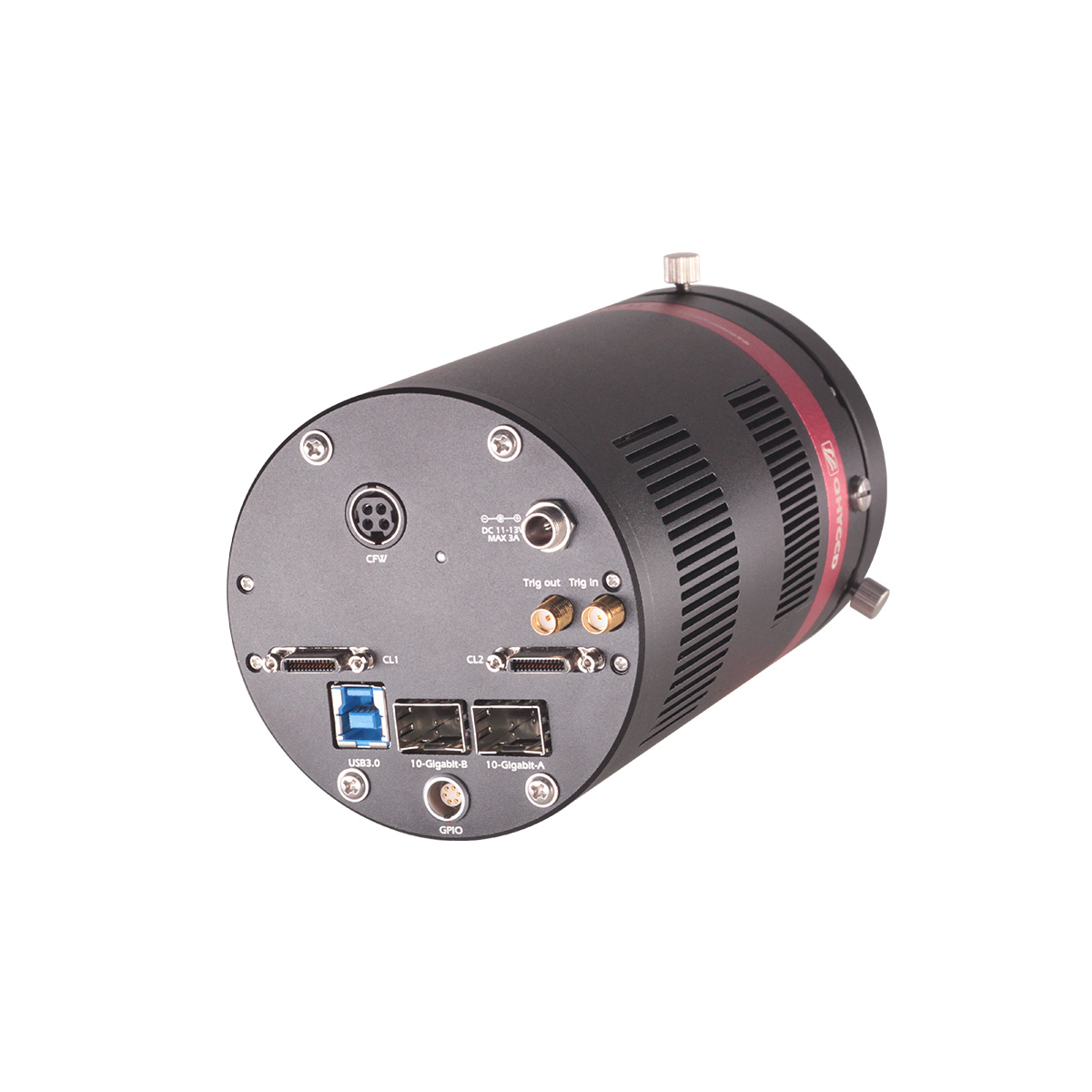
Dual 10-Gigabit Fiber Optic Ports
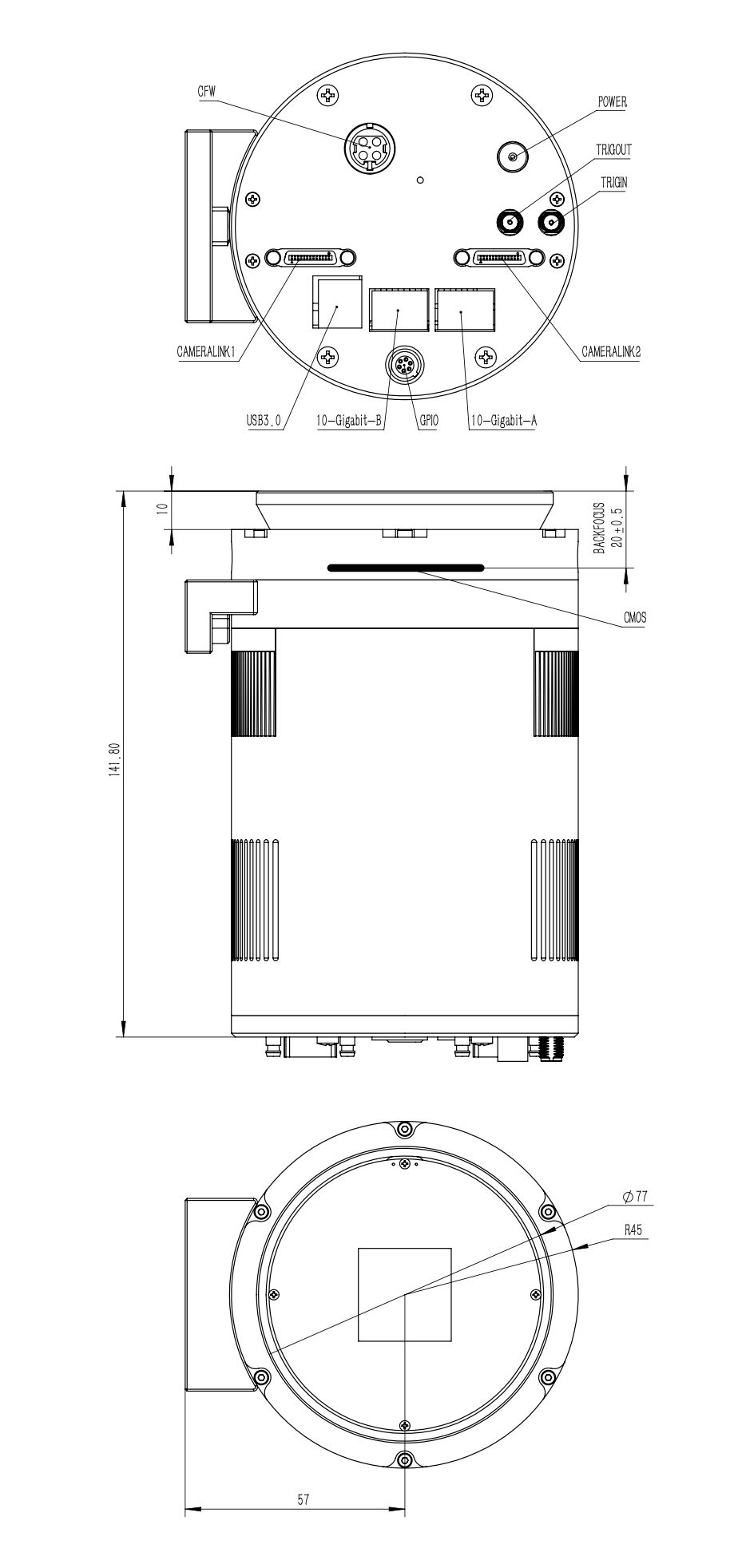
The system offers 2×10Gbps fiber optic connections (used with QHYCCD's fiber capture cards), addressing the high-throughput demands of professional environments such as observatories. These offer clear advantages over USB 3.0:
Higher Speed
Dual 10G connections deliver up to 1.6GB/s (12.8Gbps), while USB 3.0 tops out at 625MB/s (5Gbps) in theory and around 350MB/s in practice.
Extended Range
Fiber links can span hundreds of meters—far beyond USB 3.0’s range of 3–5 meters (or 10–15 meters with active cables). With standard QHYCCD fiber modules, you can transmit up to 300 meters, and with special long-range modules, several kilometers are achievable.
Noise-Free Transmission
USB interfaces can suffer from EMI, static, or grounding issues, which may corrupt images or disrupt camera control. Fiber optics eliminate these risks due to their immunity to electromagnetic interference.
6-Pin GPIO Interface
The device features a 6-pin general-purpose input/output (GPIO) port, configurable for various functions. QHYCCD can customize these settings based on user needs, or users may reprogram the internal FPGA to support more complex operations.
Compatible with Professional Camera Link Interface (Pro II Models Only)
Exclusively available on Pro II cameras, the Camera Link interface is ideal for industrial or lab use where high-speed, high-resolution data transfer is essential. Designed specifically for high-bandwidth image capture, Camera Link enables rapid and reliable transmission over shorter distances where speed and resolution are a priority.