Now Easy EMI available on astronomy products in india
Guaranteed safe & secure checkout
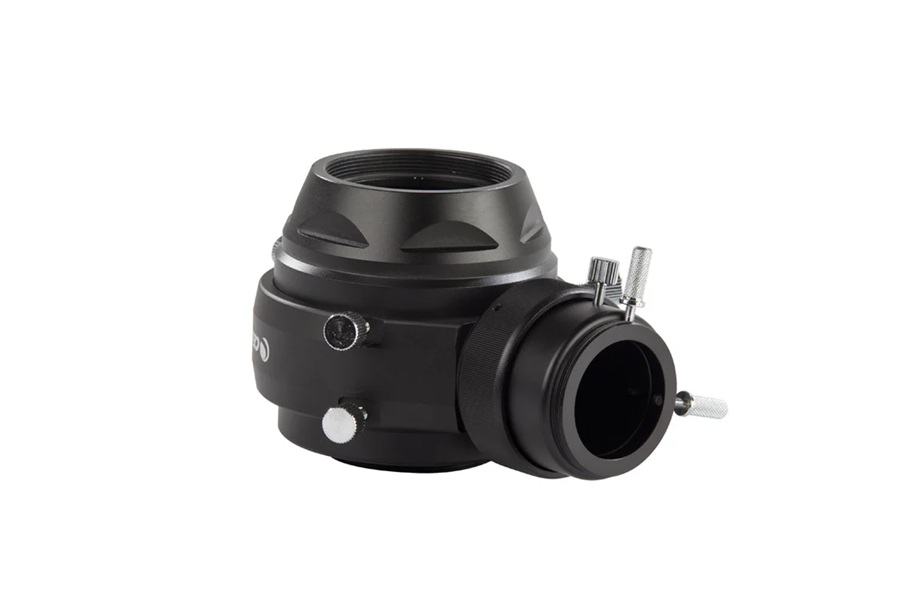
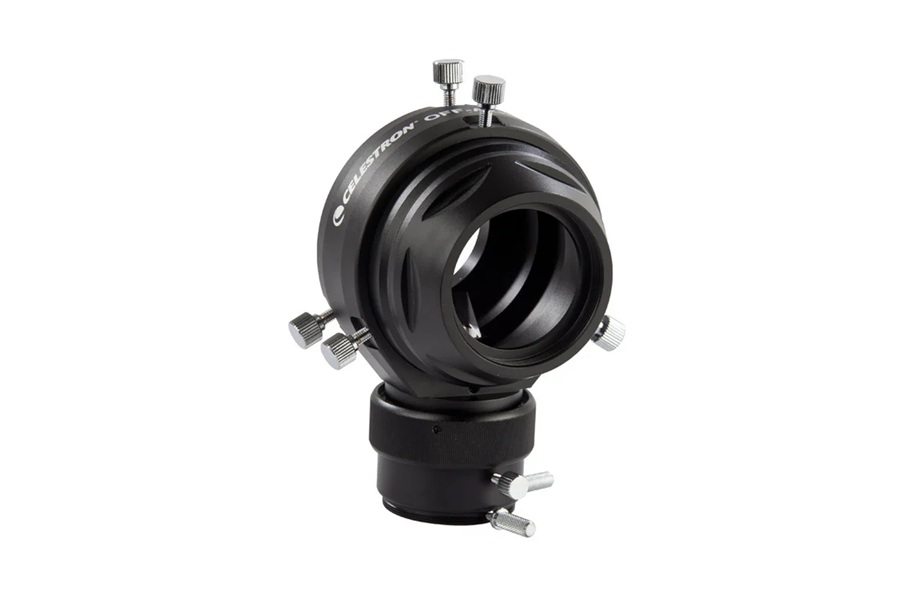
Celestron Off-Axis Guider
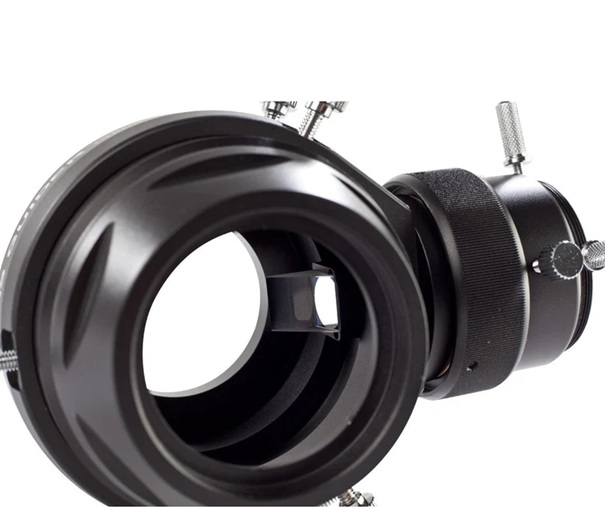
An Off-Axis Guider (OAG) is a critical astroimaging accessory for long focal length telescopes where ultra-precise guiding is required. The Celestron Off-Axis Guider uses a precision prism to divert a small portion of the telescope’s focal plane–outside the imaging camera’s field of view–to capture a guide star. Because both the guide camera and imaging camera observe the same optical path, any movement detected by the guide star precisely matches the movement seen by the main camera.
This guiding method corrects not only tracking inaccuracies, but also optical and mechanical flexure, delivering sharper astrophotos with perfectly round, pinpoint stars.
Off-Axis Guiders have been around for a long time, but typically pose three main challenges:
Although Off-Axis Guiders have been used for decades, they typically present three major challenges:
Locating a suitable guide star can be difficult when sampling the outer edges of the focal plane, especially due to limited field of view and uneven illumination.
Achieving simultaneous focus between the imaging camera and guide camera often requires time-consuming trial and error.
Many setups demand additional spacers and adapters tailored to specific cameras, telescopes, and guide cameras–adding both complexity and cost.
Celestron's Off-Axis Guider addresses these challenges by:
Celestron’s Off-Axis Guider is engineered to overcome these limitations through thoughtful design enhancements:
A large 12.5 mm adjustable prism allows positioning closer to the center of the focal plane when needed, depending on the imaging sensor size. This significantly improves guide star brightness and ensures optimal illumination of the guide camera sensor.
A high-precision fixed-orientation helical focuser enables exceptionally smooth and accurate focusing of the guide camera without rotating or altering its orientation.
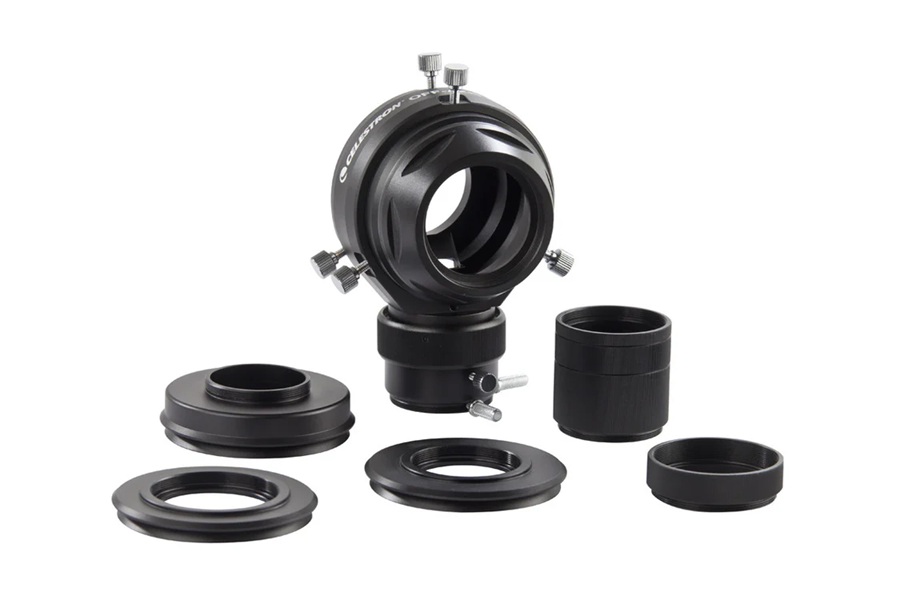
A complete set of spacers and adapters is included to support most common astrophotography configurations, including DSLR cameras, Nightscape CCD cameras, and more.